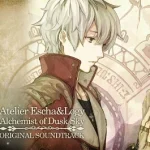
After the successful alchemy series Atelier Iris concluded its third game, the Gust development team moved to continue the line of alchemy games. However, instead of creating a fourth Atelier Iris, they created a new IP with a similar approach to alchemy, but set in a school. The successful soundtracks of the Atelier series set high expectations for this one and, after the absence of Daisuke Achiwa from Atelier Iris 3: Grand Fantasm, the duo of Ken Nakagawa and Daisuke Achiwa reunited for this project. Is it a successful recipe or does it leave a bad taste in the listener’s mouth?
Body
Anyone familiar with the current Gust Sound Team is likely to instantly recognize their style. Throughout many of their soundtracks, their work focuses on upbeat, fun pieces and more hardcore, rock-based battle themes. While it’s never explicitly stated in the credits, many have come to learn that Achiwa is responsible for the battle themes, or at least most of them, while Nakagawa composes other material. The mixture of styles found on the Gust Sound Team soundtracks is pretty astounding. You’ll come across playful pieces, rock-based pieces, and even some Celtic pieces throughout most of them. Vocals play a big part in the music as well, although not nearly as much as in the Ar tonelico series.
The opening, “Run for Your Life,” was composed by Ken Nakagawa and exhibits a rock-based J-pop style. The melody is extremely catchy and encompasses a lot of what makes the Gust Sound Team so popular. The combination of strings, rock-based elements, and bits of electronica really helps to make Haruka Shimotsuki, reprising her vocal role from Atelier Iris 3: Grand Fantasm, shine. She does a fantastic job matching the music with the energy of her voice. There are also a few other vocal pieces on the soundtrack as well.
Both “Sirius” and “Nee” feature a former vocalist, Marie. The former is a ballad. It’s a soft composition that just oozes emotion. The instrumentation is rather simplistic, consisting mainly of strings, acoustic guitar, piano accompaniment, and some more playful tuned percussion. Her voice accompanies the music quite nicely and she seems to bring a good balance to the piece. Her other performance, “Nee,” is rock-based. It’s full of energy and almost has a surfer rock feel to it. The instrumentation is rather straightforward. There are some synth bits, but the meat of the piece focuses on the electric guitar riffs and melody. I don’t really enjoy her voice as much as in “Sirius,” but it does complement the music fairly well.
There are also quite a few battle themes to be found on the album. The normal battle theme, “Splendid Force,” is a nice mixture of rock and woodwind fusion. While the majority of the melody focuses on the flute, there are some nice rock interludes as well. The additions of some brass highlights add dynamics to the piece. It’s a very upbeat, playful battle theme, but it fits the style of the game very nicely. The victory theme, “Victorious High Touch,” is quite playful as well and utilizes the same intro found in “Splendid Force.” The boss theme, however, focuses on that hard-rock feel. “The Menace” features a nice combination of electric guitar in the melody, providing a powerful, motivating force for battle, along with a fantastic riff-based accompaniment. The duel electric guitar lines in the melody, in addition to the solo, help make this a favorite on the album!
There are also quite a few other battle themes on the album. Unfortunately, as I’m still playing the game, I’m not entirely sure in what role they are used in. “Hallucinate Bell” is one such battle theme. It features a nice combination of orchestral instrumentation, rock, and organ, creating a very diverse soundscape full of motivation. The use of organ as the main melodic driver, alternating with the orchestral aspect of the composition, creates a very evil, yet heroic, atmosphere. The piano used in the bridge also helps craft an air of heroism. Ultimately, this is one of the best battle themes on the soundtrack, and well worth listening to. “Grasshopper” is a very playful battle theme as well. Full of bubbly synth and a nice percussion beat, it is perhaps one of the most cheerful-sounding of all battle themes. There are also some soft synthesized vocals thrown into the mix, as well as piano, to give it a bit more development. It’s a very nice piece of music, but as a battle theme, it doesn’t motivate me as much as some of the others.
“Repulsion” is another of the hard rock-based battle themes. Similar to “The Menace,” it features a nice electric guitar riff-based accompaniment and a piercing electric guitar melody. There really isn’t too much more to say about it, but it is quite energetic and worth a listen. Similar in style would be “Disruptor.” It features a heavy focus on electric guitar “noodling” and is the main impetus of the melody, aside from the occasional synth leads. It has a great melody and tons of energy, but it’s one I don’t come back to often. Fortunately, there is a shimmering gem towards the end of the soundtrack in terms of battle themes, and that is “Nefertiti.” In perhaps one of the catchiest intros, Achiwa utilizes piano to introduce the main melodic motif in this album. From there, it moves onto a fantastic rock-based piece that is full of energy.
The last battle theme, “Stigmata,” features Noriko Mitose. This name may be familiar to those who have heard the Chrono Cross Original Soundtrack, as she is the vocalist featured in that game. The final battle focuses on rock elements with piano and orchestral highlights throughout. It boasts a pretty catchy melody and develops quite nicely. Mitose really helps bring the melody to the forefront. Her voice can be a bit piercing at times, but it fits with the music and the addition of her chanting in the background adds a bit of contrast to the piece. It’s not nearly the best final battle theme that the Gust Sound Team has created, but it does feature some nice piano and electric guitar solos.
In addition to the rock-based battle themes, there are a few other key instruments featured. Both “Dark Black” and “Wailing in the Rain” feature piano as their most prominent instrument. “Dark Black” is a fantastic dungeon theme that combines an energetic piano line with foreboding percussion. In fact, this piece reminds me a bit of Masashi Hamauzu, because the atmosphere these elements create is similar to his style. “Wailing in the Rain” is a melancholy, somber piano-and-violin piece. It helps to generate a lot of emotion and just has a very calm demeanor about it. It’s a real beauty on the second part of the soundtrack. The violin is easily the most emotional instrument in the composition, but without the piano, I don’t think it would be nearly as effective.
Woodwinds also take a prominent role in some of the pieces. For example, “A Young Man’s Worries” features a veritable bevy of instruments. However, the woodwinds truly shine. The harp, piano, and strings all play their role, but the variety of woodwinds helps to craft a soothing, yet subtly painful, composition. It’s a highlight of the first disc. On that same note, “Wind Festival” has a very Celtic atmosphere. Used as a dungeon theme, it’s a bright, cheerful composition with free-flowing woodwind work combined with a very fitting accompaniment. While I can’t name all the instruments off-hand, they add a bit of character to the piece and give it a bit of a renaissance flair.
Summary
While I prefer the Atelier Iris soundtracks to the Mana-Khemia soundtracks, this soundtrack outshines those in some aspects. The battle themes are perhaps the most solid part of this soundtrack. The area themes are nice and feature a bevy of styles and instrumentation. The vocal performances, from the opening song to the final battle, help craft a different type of atmosphere and each one features a distinctive sound. I think that both Ken Nakagawa and Daisuke Achiwa do a fairly good job of retaining their signature sound. If you are a fan of the current Gust Sound Team, I’d recommend this one.