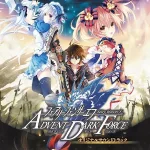
| Album Title: Ginga Force Complete Soundtrack |
| Record Label: Sweep Record | |
| Catalog No.: SRIN-1102 | |
| Release Date: March 22, 2013 | |
| Purchase: Buy at Sweep Record |
Overview
The Ginga Force Complete Soundtrack is one of the latest shooting soundtracks by Supersweep. As with Eschatos, another QUTE production, this soundtrack is primarily composed by Yousuke Yasui. This time, however, Ginga Force isn’t a solo effort and, in fact, includes composers from across Supersweep as well as guest composers Hiroto Saitoh and Yasuhisa Watanabe. How does the soundtrack turn out, given this large composer pool?
Body
The album opens with “Ginga Force (OP Size),” the anime-styled vocal theme which has the distinctive Yasui sound. It’s extremely catchy and definitely captures the overall mood of the soundtrack to follow. In addition, there is a full version of this tune at the end of the soundtrack that serves as a bonus.
The music by Yousuke Yasui is just as catchy as it was in Eschatos, and, in some ways, mirrors it very closely in terms of synth styles. While the majority is delegated to event music, which captures the spirit of the soundtrack, Yasui composes some of the most memorable stage themes and features some of the best melodies on the soundtrack, some that even rival the music on Eschatos. The melodies, on the other hand, tend to be catchier on the whole. “Aeronaut,” the first stage theme, manages to impress with its extremely memorable A and B sections, and the bridge section that occurs before the track loop, while short, is definitely my favorite part. “Gallant Gunshot,” the seventh stage theme, is definitely my favorite on the entire album. It has an energetic, synth-rock sound that gets you pumped up, and, in my opinion, the best melody on the entire soundtrack. The chord progression is one of the aspects that stands out the most, and the airy, heroic, and uplifting B section is a treat to the ears. Of course, the bridge before the loop, similar in terms of execution to “Aeronaut,” manages to be even more bubbly and infectious.
The rest of the stage themes are delegated to the other composers featured on the album. “Backdoor Blaster,” the second stage theme composed by Ayako Saso, has a great funk to it. The slap bass that dominates the majority of the track is quite infectious and goes well with the smooth synth melody it accompanies. Saso’s other contribution, “Free Flight,” the sixth stage theme, is a fantastic synth-rock tune that would fit even better in the world of Mega Man. It features a beautiful and playful melody and some lovely percussion work in the accompaniment. Of her two themes, this is definitely her strongest contribution. Shinji Hosoe’s “Dubious Dealer,” the stage five theme, conjures up images of Under Defeat. It has a wonderful retro sound and I really like the percussive elements that complement the synth melody, particularly in the B section, which is one of the strongest on the album. Kazuhiro Kobayashi’s “Excavation Express” is one of the weaker stage themes in the game, but it manages to carry that retro spirit in terms of melody. I feel that this theme would also work well in the universe.
Hiroto Saitoh, one of the guest composers, contributes the third stage theme, “Cielo Cantabile.” This theme has some really interesting percussion accompaniment, giving it a bit of a quirky element that complements the A section quite well. However, the B section is definitely my favorite portion of this tune, sounding uplifting and airy in nature, and conjuring the feeling of perfectly zipping through the air in a ship. While most of the stage themes have that retro vibe, the music by Yasuhisa Watanabe features some retro-inspired themes, although a bit more modernized than their counterparts. “Hopeful Horizon,” the eighth stage theme, features a very spacey melody that really oozes retro goodness. However, his two ninth-stage compositions, “Illicit Ideology -Invasion-” and “Illicit Ideology -Ideal-,” are definitely more modern in approach, although they do encapsulate some of Watanabe’s more atmospheric works from his Taito days. While not as melodic compared to the rest of the stage themes, they do set the tone for nearing the end of the journey, and some of the ethereal sections are truly stunning.
Yousuke Yasui is also responsible for the boss themes in the game. The regular boss theme comes in two varieties. “Bust a Move!” is reminiscent of “Massive X” from Eschatos, although not as frenetic and definitely bubblier in approach with some nice groove in the accompaniment. The melody would work wonderfully in a stage theme, but as a boss theme, it does lack that ominous nature. The Zero-G Mix helps add a bit more energy to the mix, causing the boss theme to sound more frenetic in nature and, of the two, is the superior version, in my opinion. His last boss theme, which is the entire 10th stage, “Zenith,” manages to take the tone of “Extermination” from Eschatos and amplify it. It features sharp synth bites and an infectious melody that has a heroic touch. This is definitely one of Yasui’s crowning achievements, as I feel that this tune would also work as an RPG battle theme quite well.
There are also two other members of Supersweep featured on the album that compose music used for training purposes outside of the main game. Teruo Taniguchi contributes three themes. “Tiger’s Claw” has that stage-select sound mixed with some spacey synth tones from time to time. “Tiger’s Fang” is definitely more uplifting in terms of melody and sounds like it would fit in one of the later entries in the Mega Man X series, whereas “Tiger’s Roar” sounds like a CAVE boss theme with its sinister synth tones, pulsing beat, and general lack of melody. Takahiro Eguchi also contributes three such tunes. “Dragon’s Lead” is airy and uplifting with an extremely catchy, yet also beautiful melody. “Dragon’s Menace” is a more intense theme that focuses on rhythm, although it does have some lovely synth tones. Lastly, “Dragon’s Prophecy” is another intense theme, but one that is definitely a bit more focused on melody, which has a beautiful, spacey vibe to it.
In addition to these themes, Takahiro Eguchi also remixes two of the stage themes of the game as bonuses at the end of the soundtrack. The first is his version of “Aeronaut,” which features intense electronic beats and some beautiful synth tones. I do feel that this version goes on a bit long, as it isn’t very creative; however, I appreciate how Eguchi changes things up slightly in the second half of the arrangement. His take on “Gallant Gunshot,” though, is definitely the better of the two arrangements. While the original was fast and action-packed, I love how Eguchi toned it down and made it more ethereal and beautiful. It really manages to cast it in a new light, and while it may not be for everyone, I think Eguchi has a wonderful ear for creating stunning atmospheres through his mixing and synth blends. Though Eguchi modernizes both of these remixes, they both manage to capture the retro aspect of the original in some fashion.
Summary
In the end, I think that the Ginga Force Complete Soundtrack is a very solid effort that is largely cohesive given the plethora of composers attached to the project. While it does give off an Eschatos vibe at times, I think the result is stronger than Eschatos, with more variety in terms of themes and soundscapes. If you purchase this from the Supersweep store, it also comes with an extra disc, while supplies last, that features a medley of the majority of substantial tunes on the soundtrack; however, if you purchase it from another retailer, the bonus disc isn’t a must-have, as there aren’t any special remixes featured.