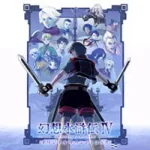
| Album Title: Suikoden Tierkreis Original Soundtrack |
| Record Label: Konami Style | |
| Catalog No.: Promotional (Game Bundle); LC-1749/51 (Separate) | |
| Release Date: December 18, 2008; February 20, 2009 | |
| Purchase: Buy at CDJapan |
Overview
Suikoden Tierkreis (the latter is German for “Zodiac”) marks the newest part of Konami’s popular role-playing game series and was released at the end of 2008 exclusively for Nintendo DS. It is the first time an original game from that series to be on a handheld (besides the Japan-only PSP remake of the first two titles) after appearances on Sony’s PlayStation 1 and 2. While featuring many traditional elements of previous installments, it immediately reached the hearts of old fans as well as new ones for being one of the best DS RPGs.
Musically, Norikazu Miura returns after his work on Suikoden IV, Suikoden V, and Rhapsodia as the sound director and main composer. For this he assembled a large crew of ten guest composers to create the music in Suikoden Tierkreis. They include freelancer Yoshino Aoki (Breath of Fire series, Luminous Arc 2), Basiscape composer Masaharu Iwata (Ogre series, Final Fantasy Tactics), and orchestral arranger Kaori Komuro (Ace Attorney Orchestra Album), as well as Konami members Tomoaki Hirono (Jikkyou Powerful Pro Baseball series) and Kazuma Jinnouchi (Metal Gear Solid series). They are joined by five members of Elements Garden: Noriyasu Agematsu, Junpei Fujita, Hitoshi Fujima, Daisuke Kikuta, and Masato Nakayama, known for their work on various game and anime productions such as the Wild Arms video game series. Even Miki Higashino, acclaimed composer from the first two titles, was asked by Miura to participate on the soundtrack; however, due to scheduling conflicts she was unable to work on Suikoden Tierkreis.
Quite a large number of composers for a small DS title, you ask? Well, to be honest it isn’t that small; even if Suikoden Tierkreis is “only” a spin-off of the series, it was an important project for Konami, and the idea of assigning each composer a location or race to compose for produced an enormous tide of variation and styles in the gameplay. Let’s take a closer look at the epic score of this game.
Body
“Beyond the technical challenges we used both internal and external composers to create the music for the game. For this game each composer is in charge of each area and race. I coordinated each area with the style and personality of the composers.” – Norikazu Miura
“A Plain and the Sky” marks the first piece on the soundtrack and once it begins fans should immediately scream “Suikoden” as it features the typical luscious ethnic style like in the past. It’s also one of several tracks which feature live instruments such as flute, guitar, percussion, strings, and brass. It’s the first time a Nintendo DS game had such a technically advanced soundtrack as this one — I can only applaud the sound team for this. The same goes for the typical Suikoden-styled map theme “To the World”, the intense violin-focused track “Sally Beacon”, and “Village in the Mountains”, a piece which makes wonderful use of guitars and violin to fit its scenery. Other notably early additions to the soundtrack include “Janam Sorcery Empire”, which blends Arabian and Indian instruments, and “Maw Entrance of the Southern Sea”, which keeps the melody from the previous track in a more lively and fast-paced way.
“Capital of the One Way” introduces us to the orchestral work of Kaori Komuro, who was responsible for the Cynas-related themes among others. For the first theme, she uses a Baroque-style arrangement of strings, brass, and harpsichord. It’s a shame the piece doesn’t loop, as it’s rather short, but the one and a half minutes are absolutely awesome to listen to. The same goes for Yoshino Aoki’s contribution, “Home of the Porpos”, a gallant and brilliant piece featuring strings and oboe against a slight waltz rhythm. It colors the scenery of Naineneis, home of the amphibious Porpos-kin. Both tracks are definitely among the top-notch compositions on the score. Her other notable appearances are the accordion-based “Wandering Caravan” and the jazzy “The People of the Sea”, which prove once again her excellent ability to color the scenery with different soundscapes and styles.
The remaining tracks on the first disc range from the bouncy and cheerful Citro Village theme “Frontier Hamlet” over to the fast-paced “To the Snowy Mountain”. The latter is a wonderfully adventurous and fun track, which reminds me a bit of Grant Kirkhope. “The Fort Where the Stars Gather” seems to be inspired by earlier soundtracks from the series and also incorporates the main theme within like many other tracks on the score. In addition, Masaharu Iwata introduces himself with the track “By the Pride of the Sword”, a military theme with his usual intense orchestral use. The two battle themes are set at the same level as earlier themes in the series and feature many traditional elements. “Rushing into Battle!”, in particular, marks an interesting mix of old and new styles. It may not be the most original composition, but it’s still effective and enjoyable on its own. A step forward is the boss theme “A Powerful Enemy Appears!” with its intense use of percussion and string and brass sections. I really like the development here from the dramatic opening to the heroic section thereafter.
“The acoustic sound of the live performance is a feature of the Tierkreis sound. We recorded many instruments; the percussion instruments such as African percussion, the stringed instruments such as a violin and cello, the wind instruments such as a trumpet, oboe, and flute, and the race musical instruments such as saz.” – Norikazu Miura
The second disc features another multifaceted collection of tracks for the different scenes of the game. Yoshino Aoki’s “Village of the Proud Beast God” takes the ethnic style from her Breath of Fire IV score and illustrates the home of the Furious Roar tribe in a very effective way with tribal percussion and chants as well as beautiful melodic passages. The second version of the map theme “Arrival on the Great Plains” features the same style, but a bit more intense and with another incarnation of the main theme.
Masaharu Iwata’s fingerprints appear on the three Pharamond-related themes from the ninth track onwards. While “Northern Hill” returns the military action with intense and dramatic orchestral work, the following track “Pharamond Castle” features a slow and majestic arrangement in a similar style. “Nation of Pharamond” finally gets out of the serious atmosphere and colors the scene with a lighthearted and playful town theme. Other tracks, including “Shining Castle of Dying Wishes” and “One Who Watches Over the Stars”, are more or less disappointing. The first once again shamelessly uses an already existing arrangement and incorporates yet another version of the game’s main theme. The latter is a Michiru Yamane-inspired piece full of melancholy. It’s sad that the famed “Touching Theme” is replaced here with this track, as it’s not one of the standout tracks.
“Woodland Colony” and “Woodland Nation” return the ethnic atmosphere to the soundtrack with beautiful flute sections as well as some experimental synth and ambient soundscapes. This ensures they work perfectly during gameplay. Moving on, “Scorching Hot Mountain” is another high-spirited dungeon theme with fantastic development of different sections, similar to “To the Snowy Mountains”. With “Village of the Giant Tribe” and “Lost Civilization”, the ethnic feel returns with extraordinary arrangements of orchestral and tribal work. The second track is worth mentioning with its very interesting insertions of the main theme and a phenomenal soundscape.
Nearing the grand finale, “Twelfth Detonation” marks the last variation of the map theme with a lush and haunting main theme within. I really like the fantastic instrumentation here, which captures the perfect atmosphere of determination. “To the Fulfilment of the One Way” is Kaori Komuro’s second attempt to illustrate Cynas in the last moments of gameplay. From the epic beginning to the more mellow section of strings and haunting choir, the piece is one of the most memorable tunes that ever appeared on the Nintendo DS. Climactic music at its best and once again very unusual for a Suikoden title. At the end, we have an instrumental version of the main theme “Tierkreis ~Door of Hope~” with Gen Ittetsu as violinist as well as the ending theme “Every Future”, written and performed by Kaori Komuro. It’s a very peaceful and serene, but also quite corny piece; sadly, it’s not one of the most memorable ones compared to “Tears in the Sky” or “Tierkreis ~Door of Hope”. It’s interesting to note that Norikazu Miura lends his voice in the later part of the song if you listen carefully.
“The music of Suikoden Tierkreis is certainly ‘Suikoden’. This is because I am a big fan of earlier Suikoden’s musical direction. It follows the series’ music style and encompasses the ‘Suikoden feel’.” – Norikazu Miura
Finally, we have a third disc titled “Additional Disc”. It’s packed with several event themes, additional battle themes, and other minor background music from the game. Fans of the series can enjoy the traditional “Beginning Theme” in the form of the first track. It’s treated in a similar manner to Suikoden II‘s and also includes snippets of Tierkreis’ main theme. “War Council” is another take on Suikoden II‘s “Tactics” motif with the addition of the main theme from Tierkreis. It’s a similar idea to what Miura had already done with the tactics theme from Suikoden V. Other traditional-tinged themes range from “Peaceful Cidro”, a slow and calm version of “Frontier Hamlet” from the first disc, the Celtic-inspired “Commerce and the Merchant”, and the tango-influenced Quest theme “The Married Moana”.
Beyond this, there are a couple of interesting tracks. In particular, the themes for the Blades of the Night’s Veil are well done. Chrodechild’s theme “Sword Princess” is a very heroic and pulsing military piece with strong brass and string notes. Iwata did an excellent job portraying the strong-willed persona of this character. On the opposite end of the spectrum, “The Suffering Sister of the Night’s Veil” is an emotional piece with lush instrumentation of harp, woodwinds, and strings based on the major motif from the Blades. One of my personal favorite battle themes from the soundtrack appears on the next track, “Twin Blades”. The piece is packed with power, emotion, and adrenaline from the first seconds, especially if you played the game and remember the scene. I won’t spoil much here, but it’s a tragic battle between two important personalities. The melody is simply awesome and the steady percussion helps to bring up the atmosphere and tension needed. Also, the short heroic interludes in the form of horns are well done.
“The Wandering Pluck Bow Player” is the theme for Ramin, a bonus character and obviously a favorite of composer Miura, as his blog uses him as a logo and he mentioned him several times in his writings. Well, both persons share one thing: the music. Ramin’s theme has some Spanish and Arabic influences in the form of guitar and strings, and includes an incarnation of the prominent “Door of Hope” motif. “The Power of Pent Up Anger” is an interesting remix of the battle theme with elements of Ramin’s theme inserted. The themes for the Rigid Folk, “Giant of a Proud Mountain” and “Fierce Fighting with the Giants”, are also well done and portray the giants as a strong, but proud, race.
Summary
At the end, Suikoden Tierkreis features a fascinating soundtrack with several styles and atmospheres. Many tracks are held in the traditional manner of the series and some classic tunes also return like “Name Entry” or “Victory Theme”. Beyond this, there is also a handful of new material and unique compositions, which you have not heard before in any Suikoden title. It’s no surprise: with so many talented and multifarious composers on board, they all did a great job here!
Norikazu Miura shows once again that the series has a place deep in his heart and that his ability to bring old as well as new winds to the music direction has not decreased. I can only applaud him for the idea of assigning composers to different areas and races, which helps to color the musical scenery. Having a few streamed music tracks with live instruments is also remarkable, something no other Nintendo DS game had done so successfully before. Musically, they pulled almost everything out of the little handheld. My only complaint is the re-use of the game’s main theme, which is milked a little too much here and appears in unnecessary tracks.
Luckily, after several months Konami released a separate soundtrack for this game (it had initially been bundled with the game, which Norikazu Miura doubted—he doesn’t like soundtracks bundled with games). It’s probably one of the richest, most multifarious, and extraordinary soundtracks for the Nintendo DS to date and shouldn’t be missing from any music collection. If you are familiar with the series or not, grab it!