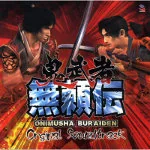
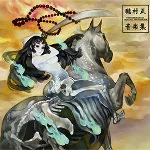
| Album Title: Driving Emotion Type-S / Bushido Blade Original Soundtrack |
| Record Label: Super Sweep Records | |
| Catalog No.: SRIN-1003/4 | |
| Release Date: December 29, 2001 | |
| Purchase: Buy Used Copy |
Overview
Two of Shinji Hosoe’s first works as a freelance composer were Driving Emotion Type-S and Bushido Blade. Joined by Ayako Saso and Takayuki Aihara, he offered his distinctive blend of electronic stylings on these titles while contrasting their gameplay and scenarios. The soundtracks were released as a joint set in 2001 as one of the first releases by Hosoe’s record label SuperSweep.
Body
A quick look at the first disc introduces the listener to the unique musical stylings of SuperSweep. Most of the music is techno-based, but there’s also some rock and junk thrown in for good measure. One of the more varied tracks is “Rush About,” which was composed by Hosoe. A flurry of electronic beats starts the track up, quickly followed by a duet of saxophone and electric guitar, and a touch of piano here and there. While it may sound messy, it’s actually a strong opener, and is sure to please everyone.
Ayako Saso’s biggest contribution here is “Best Tone,” a wonderful electric drum and bass venture, with a bit of synth at points. At one point, we are treated to a delightful bass solo, which escalates the overall enjoyment of the track to perfection. Takayuki Aihara’s most interesting contribution is “F-Beat,” an 80s rock tune sure to get the listener pumped up as he or she is driving across the highway. The melody is simply too catchy to possibly ignore and it is among the better tracks of the soundtrack. Shinji Hosoe brings us the calmest track, being “Recollections of Sepia.” Its light piano start simply gets the listener to ‘chill out’ and relax a good deal. A bit of synth work is also in order, but this doesn’t detract from the melody at all. Overall, the Driving Emotion Type-S is a marvel of its own. Those enjoying techno, rock and jazz will appreciate it a fair amount.
Bushido Blade‘s music, composed by the same trio as Driving Emotion Type-S, features ‘meditative’ music, so to speak. The main instrument is the shamisen, a type of Japanese lute. “Bushido Theater” gets the feel of the soundtrack nicely, starting up with an Asian flute solo, then the shamisen joins in along with tribal drums. It depicts the sacred art of Bushido quite nicely. One of the more interesting tracks is “Kannuki’s Final Performance” — its slow pace and use of shamisen and violin create an interesting aura which defines the mysticism of ancient Japan perfectly. It is a bit too calm for a battle theme, but it works surprisingly well.
“Hiding in Shadow” is the longest track here — over 4 minutes — and has amazing transitions. Starting off in a mysterious flute solo, it quickly gives way to quick bursts of violin samples, then voice samples are heard in the background while electronic beats and the shamisen plays every now and then as the track gets more furious. At about 2:40, we are treated to a quick but delicious violin solo, which then disappears to make way for another wave of electronic beats and a bit of flute and shamisen, and ends in another wave of quick violin bursts. It really gives the sense that a desperate battle is taking place between two warriors. Overall, the score of Bushido Blade is fairly light in tone and feel, as opposed to the score of Driving Emotion Type-S.
Summary
With two different spectrums from SuperSweep, it’s one of the better ways to discover Shinji Hosoe and collaborators’ musical talents. If you enjoy most forms of electronica, rock, jazz, and oriental music, chances are you’ll be glad to discover this treasure.