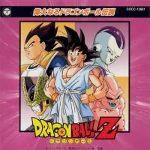
| Album Title: Dragon Ball Z -Super Gokuden- Assault Chapter |
| Record Label: Forte Music Entertainment | |
| Catalog No.: FMCC-5061 | |
| Release Date: April 21, 1995 | |
| Purchase: Buy Used Copy |
Overview
The coolest thing about RPG scores is their ability of emotionally involving and capturing the imagination of the listener more than any other kind of soundtrack. It’s because of their structure and contextual nature that soundtracks from RPG games manage to stand the test of time so well, regardless of their sound quality. Dragon Ball Z: Super Gokuden Assault Chapter is an RPG released in 1995 only in Japan for the Super Famicom. It’s a relic of a game, being one of those titles that never made it outside of the East, despite being pretty good. The soundtrack was composed by Kenji Yamamoto, aka “The Dragon Ball Game Music Guy”. Yamamoto’s versatility as a composer and arranger never ceases to amaze. He managed to create a totally unique style that was very appropriate for the world of Dragon Ball, and at the same time created pieces that were entertaining and memorable for any game music enthusiast. Despite the majority of his contributions being for fighting games, in my opinion his music tends to lean much more towards RPG-type scores, at least prior to the Budokai games of the new century. His contribution to Super Gokuden certainly proves that he should have created much more soundtracks for RPGs, especially since his music is dominated by highly melodic soundscapes.
The arranged album of the Super Gokuden soundtrack follows the same formula of his 90s Dragon Ball Z Game Music albums, which feature varied arrangements of their low-synth counterparts from each respective game. They have a much more experimental nature, fusing many elements together, disregarding conventional stylizations of music. Super Gokuden is no exception to this formula, but still, it’s easily accessible and entertaining due to its much more coherent formula.
Body
The most notable aspect of Yamamoto’s work is his fusion of rock, synthesizers, and classical music. He seamlessly integrates these elements together to create something that is familiar yet fresh to the ears. Perhaps the best example of this, as well as one of the best tracks of the album, is the battle theme “Encounter”. The track is a combination of blazing electric guitars, harmonic orchestral motifs and excellent synth. The best part comes after the 1 minute mark, empowering the listener with compelling rhythms and melodies, later followed by amazing guitar solos. It’s easily one of the best examples of RPG battle music that manages to capture the essence of adventure and suspense and compel from start to finish. Since we are into rock territory, “Meeting of the Martial Arts Masters” is a total blast of punchy guitar riffs and synths, offering one hell of a rocking experience full of tasty guitar solos and catchy melodies. On the other hand, “Rage! Son Goku” is a tremendous earworm piece of music, combining catchy synths, melodic percussion, and truly tasty guitar jams. It’s a fun, upbeat theme that satisfies and pleases on many levels.
The album really shines with its more classical-oriented compositions. “Searching for the Dragon Balls” is more or less a re-arrangement from the version of Dragon Ball Z: Super Butouden 2. Needless to say, it’s a gorgeous piece that moves the listener with its beautiful Asian ethnic melodies, creating an ethereal aural experience that does nothing but wander. “Beneath the Great Master” is also very memorable. It’s an elegant, harmonic orchestral composition, almost resembling a waltz. Here Yamamoto truly managed to showcase his impressive piano skills, creating a relaxing and wonderful piece of music. I certainly would never have expected to hear something like this on an album with “Dragon” and “Ball” in the same title.
On the other hand, “The Great Demon King is Revived” is the most complex theme on the album due to its avant-garde approach. The theme incorporates mostly elements from classical Baroque music, building up into a suspenseful, dramatic, and fulfilling orchestral composition. It’s mesmerizing, compelling, and very beautiful despite its dark, eerie tone. “Moment of Terror” is similarly impressive and dark, but in a completely different way. Despite having an engrossing but heavily dramatic piano intro, the theme soon becomes a much more invigorating, albeit dark, orchestral theme full of fast percussion and captivating string melodies. The track develops further with a different melody and rhythms, creating a certain level of anticipation and danger, but totally ruins the amazing soundscape previously created. It’s clear that Yamamoto is very comfortable and capable in creating moving and emotionally intense orchestral music.
The track that most resembles music from an RPG is “Cheerful Friends”, which is a combination of quirky, upbeat and catchy motifs, later developing with more vigorous orchestral elements and a synth-pop section at the end. It’s a fun and lively track that will surely get stuck in your head. And speaking of memorable tracks, “Decision” is an incredibly smooth jazz track. It’s a youthful and tender theme, and despite feeling very out of place on this album, its warm and romantic vibe and its ’80s feel are totally worth it. Yamamoto has shown in the past his skills in jazz music, implementing exquisite sax solos in some of his arrangements, but here he simply lets loose and creates a catchy and emotional jazzy-pop tune. Finally, “Epilogue ~ Piccolo’s Demise” is another fantastic and well-developed track, combining rock with some really interesting orchestral elements, alternating from mellow piano notes to compelling string motifs, all backed up by a repetitive but effective rock accompaniment.
Summary
Dragon Ball Z: Super Gokuden Assault Chapter is a worthwhile album for every game music fan. It can please both lovers of RPG-style soundtracks and those used to Kenji Yamamoto’s style, and, even more importantly, draw in new fans. The album is full of varied, unique themes, with all of them having something tasty to offer. Whether it is the emotionally moving orchestral compositions like “Beneath the Great Master”, the avant-garde classical piece “The Great Demon King is Revived”, the stylized rocking jam “Encounter”, or the beautiful jazz track “Decision”, the album won’t fail to satisfy people who simply love good music. Definitely, this is one of Yamamoto’s best albums, and also one of the hidden gems of VGM that deserves much more attention and praise, offering unparalleled energy and melodic muscle. Highly recommended.